 ES
ESA note from Liza — I co-founded Regular and I’m a mom of one — not a scientist, I just go down these rabbit holes so you don’t have to. This one surprised me: how much your relationship quietly shows up in your body. Why trust us.
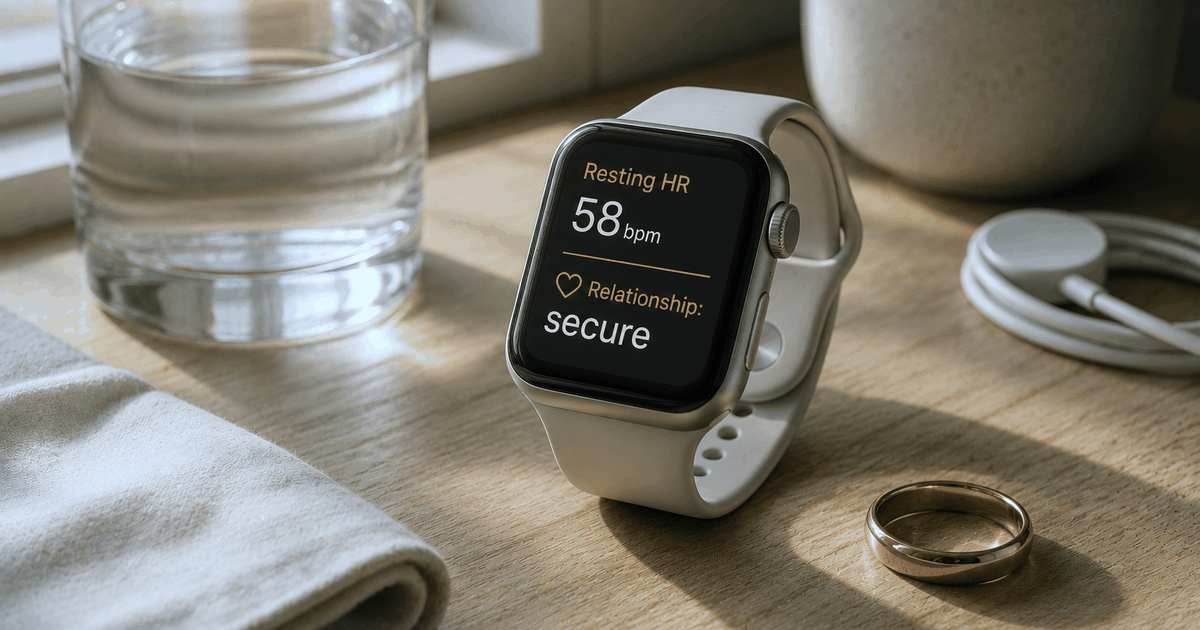
Confidence in your relationship shows up in your health because feeling securely attached keeps your stress system switched off, which tracks with better sleep, lower stress hormones and steadier mental health. What sounds like a soft, emotional thing turns out to be a measurable, physical one.
Your body keeps score of how safe you feel
Studies repeatedly link relationship security — the quiet confidence that your partner is there and you are on the same team — to better sleep, lower stress hormones, and steadier mental health. A large review of marital quality and health (Robles and colleagues, 2014) found the link runs in both directions: warmer relationships track with better health, conflict with worse. Uncertainty does the opposite: when you are not sure where you stand, your threat system stays switched on, and that low hum of vigilance shows up in your body. It is one reason a tense, unsafe relationship can weigh on you more than being single.
Confidence is built from small signals
Security does not come from grand declarations. It is built from small, repeated signals: showing up when you said you would, responding when she reaches out, and repairing quickly after a fight. Predictable, ordinary reliability is what tells the nervous system "you are safe here."
For new parents
The newborn season shakes that confidence for almost everyone — less time, less sex, more friction. Naming it out loud ("we are a team, and we will get through this") and then backing it up with small consistent actions rebuilds the sense of security — much of reconnecting after a baby is exactly this kind of quiet, repeated reliability. And that is not just nice to feel; it shows up as calmer days and better sleep for both of you.
Frequently asked questions
Does relationship quality affect physical health?
Yes. Strong, supportive relationships are linked to lower stress, better heart health and longer life, while chronic conflict is linked to worse outcomes. Connection is a health factor, not just a feeling.
How does a good relationship improve wellbeing?
Supportive partners buffer stress, encourage healthier habits and provide emotional security — which shows up in lower cortisol, better sleep and stronger immune function.
Can improving my relationship improve my health?
Evidence suggests yes — reducing conflict and increasing warmth and support is associated with measurable wellbeing benefits over time.
Why does this matter after a baby?
The post-baby year strains the relationship most. Protecting connection during it is not just about the marriage — it supports both partners' mental and physical health.
What's the simplest thing that helps?
Small, consistent positives — appreciation, affection and quick repair after conflict — do more for relationship health than rare big gestures.
Keep readingIs single better than a bad relationship? · Savoring good moments builds a buffer · Oxytocin and the parent–infant bond, explained
Co-founder of Regular. Writes about relationships, parenthood, and the science of how couples stay close after a baby.
About Regular — the relationship app for new dads, built by a small team of parents who needed it themselves. Small, science-backed moves with your partner, not big talks.