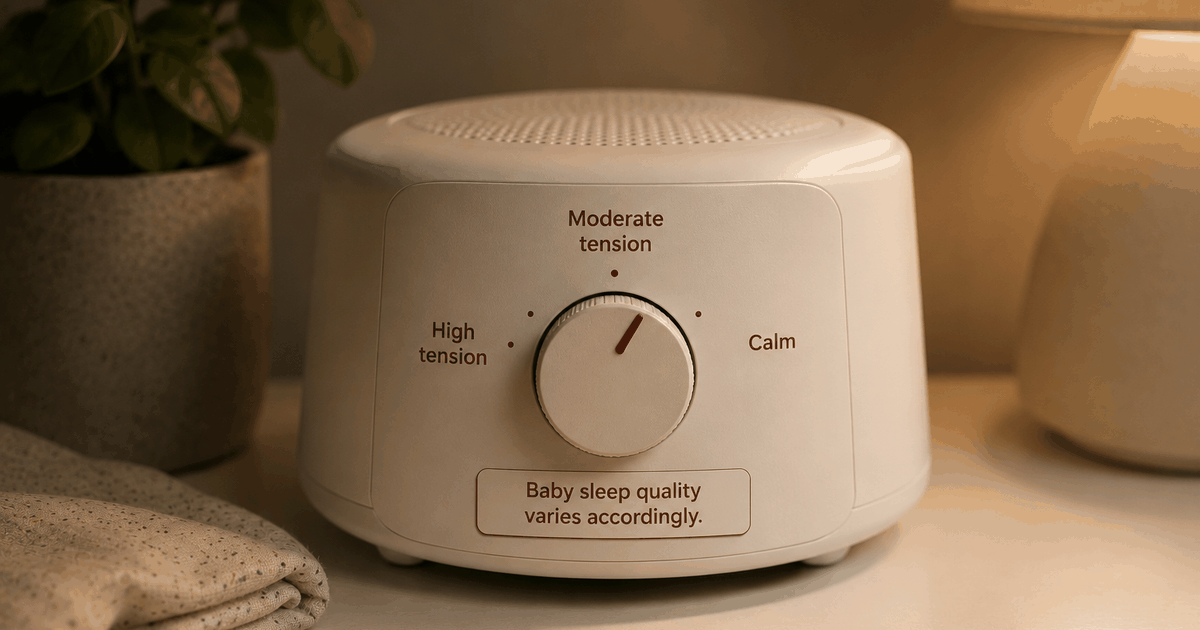
A Finnish study following 1,667 families found infant sleep is tied to the family's emotional climate and parenting stress — not just bedtime mechanics. Put simply: the calmer the home, the better the baby tends to sleep. Published in the Infant Mental Health Journal, 2026.
When the baby won't go down, every guide sends you to tactics — swaddles, schedules, blackout curtains. All useful. But this study zooms out: the family's atmosphere, parenting stress, and how parents soothe all showed up in how infants slept.
That cuts both ways, and here's the honest part. A tense house can feed rough nights; rough nights crank the tension higher. Your and your partner's stress isn't a side issue to the sleep problem — it's part of the loop.
Which isn't a reason to blame yourselves at 3 a.m. It's a reason to treat "fix the baby's sleep" and "lower the temperature between us" as the same project, not two separate ones.
Source: Palm et al., Infant Mental Health Journal, 2026 (Finnish cohort, 1,667 families; sleep assessed pre-birth and at 3 and 8 months).
Keep readingHow to be a better husband after a baby · Lonely as a new dad? Why it happens and what helps · How relationships work — the crisis map

Co-founder of Regular. Writes about relationships, parenthood, and the science of how couples stay close after a baby.
About Regular — the relationship app for new dads, built by a small team of parents who needed it themselves. Small, science-backed moves with your partner, not big talks.