 VN
VNA note from Vadim — I’ve felt that ugly flicker watching my wife light up for the baby — three times over. It passes, and it doesn’t make you a bad dad. Why trust us.
Yes — feeling jealous of your own baby is normal, and it's more common than any new dad says out loud. It's almost never about the child; it's a signal that your closeness with your partner dropped off a cliff. In an 8-year study following couples through the transition to parenthood, relationship quality fell sharply and abruptly after the baby arrived — a sudden drop, not a slow fade (Doss et al., 2009). The feeling is information, not a verdict on you.
You're not supposed to admit this one. You love your kid more than your own life — and yet there's this hot, ugly flicker when your partner lights up for the baby in a way she hasn't lit up for you in months. Then comes the second punch: the shame for feeling it at all.
So you type the question into a search bar at night, where nobody can see you ask it. Good. Let's actually answer it — without the flinch, and without pretending you're the only man who's ever felt this way. You're not.
Why feeling jealous of your baby happens
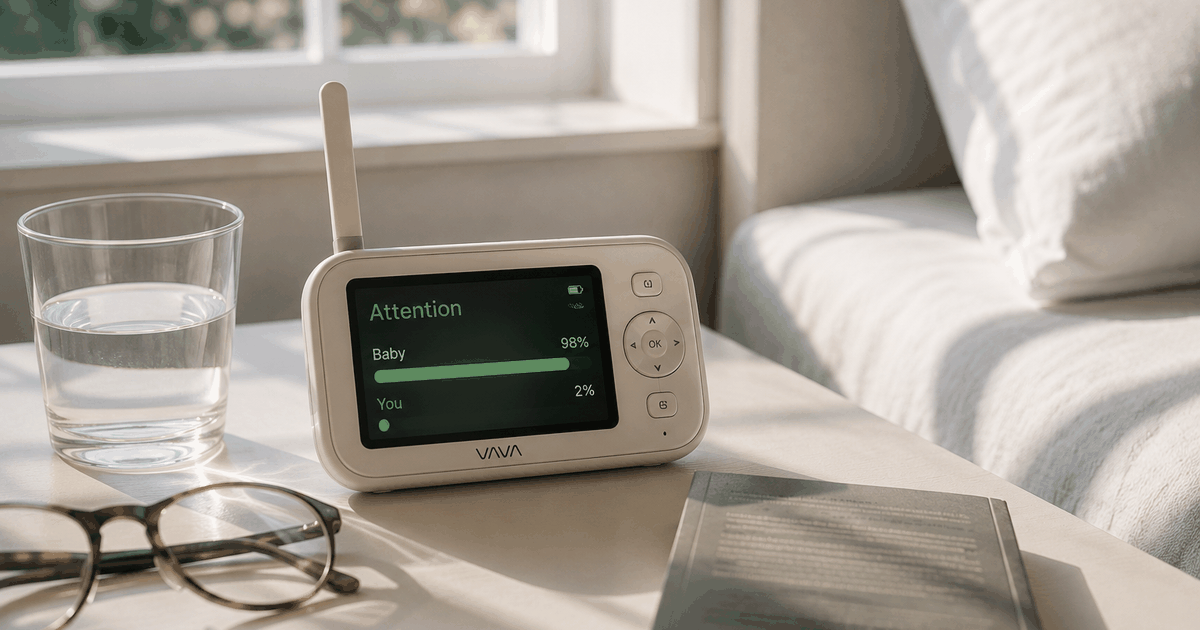
Jealousy of a newborn happens because nearly all of your partner's finite attention, touch, and tenderness gets redirected to the baby overnight — and your nervous system notices the loss before your reason can explain it. It's the same wiring that made you bond with her in the first place, now registering a sudden drop in connection.
Think about what actually changed. The person who used to greet you first now greets the baby first. The touch that used to be yours is spent by the end of the day. The conversations are about feeds and naps, not about you two. None of that is anyone doing anything wrong — it's the math of a newborn. But your brain reads scarcity, and scarcity around a loved one feels like jealousy.
of fathers hit the peak of postpartum depression at 3–6 months — the same window when couple closeness bottoms out and jealousy tends to surface.
Why the shame makes it worse
The shame is the real problem, not the jealousy. A feeling is just data; it only becomes destructive when you bury it, because suppressed emotion in new dads tends to curdle into numbness, resentment, and the quiet loneliness so many new dads carry — which damages the very relationship you're missing.
Men are handed almost no permission for this. The cultural script is "be grateful, be strong, be the rock," so a jealous thought feels like proof you're secretly a bad person. You're not. You're a person whose needs got deprioritized, having a completely predictable response.
"Feeling isolated and like you have to work things out on your own and not ask for help is a uniquely male view that can lead to numbness and detachment."Raymond Levy, PsyD, Harvard Medical School / Massachusetts General Hospital (Fatherly)
The danger isn't the jealousy. It's the silence around it. Buried, it becomes distance; named, it becomes a request you can actually make.
couples were tracked across five years: where fathers stayed involved and the coparenting worked, relationship quality held up — that engagement buffered the drop that usually follows a baby. Building your own bond with the child is part of how the jealousy loses its grip.
Jealousy vs. something more serious
Ordinary jealousy comes in flickers, passes, and points toward wanting closeness; depression-level resentment is constant, flattens everything, and points toward hopelessness. The line between them is duration and reach — a passing pang is normal, a two-week fog is a reason to call someone.
Here's a simple way to tell them apart.
| Normal jealousy | Worth getting help for |
|---|---|
| Comes in flickers, then passes | Constant, most of the day, for 2+ weeks |
| You still feel love and warmth toward the baby | Numbness or resentment toward the baby that won't lift |
| Points at "I miss being close to her" | Points at "nothing will get better" / hopelessness |
| Eases when you reconnect as a couple | Doesn't ease no matter what you try |
| You can name it and laugh, even ruefully | Thoughts of escape, or that they'd be better off without you |
If you're in the right-hand column — especially the last row — that's not weakness, and it's not permanent. It's a medical thing with good treatment. Talk to a professional this week.
What actually helps tonight
What helps is treating the jealousy as a pointer to an unmet need and acting on that need: name the feeling, translate it into a request for closeness, and build your own bond with the baby. Couples who reconnect intentionally recover; those who wait it out often stay stuck for years (Doss et al., 2009).
- Name it privately, without judging it. "I feel jealous — that's a feeling, not an action, and it doesn't make me a bad dad." Naming an emotion measurably lowers its grip and stops the shame spiral.
- Translate jealousy into a need. Under "I'm jealous of the baby" is almost always "I miss feeling close to my partner" — the same ache behind wanting to reconnect with your wife after a baby. That second sentence is something you can actually ask for.
- Ask for one small slice of couple time. "Can we have ten minutes that's just us tonight?" You're not competing with your child — you're protecting the couple underneath the parents.
- Build your own bond with the baby. Because your relationship shapes how you bond with your baby, claim a caregiving ritual that's yours — the bath, the evening walk, bedtime. One-on-one time turns the baby from a rival into your kid, and involved, hands-on fathering is linked to better relationship quality for both partners (Bouchard, 2017).
- Watch the line into depression. If jealousy hardens into constant resentment or numbness for two weeks or more, call a professional — paternal depression is real and tends to peak around 3–6 months in (Rao et al., 2020). That's care, not failure.
Frequently asked questions
Is it normal to feel jealous of my own baby?
Yes, it's normal and more common than dads admit. Jealousy of a newborn is usually a sign that your need for closeness with your partner went unmet, not a sign you're a bad father. In an 8-year study of couples, relationship quality dropped sharply after the first baby (Doss et al., 2009), and the jealousy is one way that decline shows up for dads.
What does it mean if I'm jealous of the attention my baby gets?
It usually means you're missing the closeness you used to have with your partner, not that you resent the child. Feelings aren't choices, and a jealous feeling is information: it points at an unmet need for connection. The healthy move is to translate it into a request for couple time rather than judging yourself for having it.
Is feeling jealous of the baby a sign of paternal postpartum depression?
It can be one thread of it, but jealousy alone isn't depression. Paternal postpartum depression is real, affecting roughly 8–10% of new fathers and peaking around 3–6 months (Rao et al., 2020). If jealousy hardens into constant resentment, numbness, or hopelessness lasting two weeks or more, talk to a professional.
Will the jealousy go away on its own?
For most dads it eases as the couple rebuilds connection and the dad forms his own bond with the baby. It does not reliably fade if you bury it — the underlying disconnection can linger for years without intentional reconnection (Doss et al., 2009). The feeling fades fastest when you act on the need underneath it.
How do I stop feeling jealous of my baby?
Name the feeling without judging it, translate it into a need for closeness, ask your partner for one small slice of couple time, and build your own one-on-one bond with the baby. A daily check-in tool like Regular gives you the prompt to reconnect with your partner so the jealousy loses its fuel.
Keep readingLonely as a new dad? Why it happens and what helps · Dead bedroom after baby: what's normal and what helps · How relationships actually work after a baby
Contributing editor at Regular, and a dad himself. Writes the honest, from-a-dad's-side pieces on closeness, sex and the messy first year.
About Regular — the relationship app for new dads, built by a small team of parents who needed it themselves. Small, science-backed moves with your partner, not big talks.