 ES
ESA note from Liza — I co-founded Regular and I’m a mom of one. I wrote this from the wife’s side — honestly, from my own first year. Why trust us.
To tell your wife you feel lonely without making her feel guilty, name the shared change ("everything shifted when the baby came"), own the feeling with "I miss us" instead of "you never," ask for one small thing tonight, and end with something you appreciate. Say it as "us," not "you."
For the first few months after our daughter was born, I had no idea my husband was lonely.
Not because he hid it. Because I was too far underwater to look up. I knew he wasn't doing anything wrong, and I knew he was exhausted too. But between the recovery, the hormones, and the round-the-clock job of keeping a tiny human alive, I genuinely couldn't see that the man next to me felt invisible.
It took us a long time — both of us — to learn how to talk to each other again.
So if you're the husband holding the sentence "I feel lonely," afraid it'll land as a complaint: from the other side of the bed, it isn't selfish, and it's far more common than anyone says. And there's a way to say it that actually reaches her.
Most couples lose ground on closeness in the first years after a baby, and the dip tends to linger without intentional repair — an 8-year study of 218 couples tracked exactly that pattern (Doss et al., 2009). I was a textbook case and didn't know it.
Here's how to tell your wife — from the wife who missed it: name the shared change, own the feeling, and ask for one small thing tonight.
Why I couldn't see you
She can't see you right now because her attention has been hijacked — not withdrawn — by the round-the-clock job of keeping the baby alive. If your wife seems to look straight through you right now, here's what's probably happening on her side — because it happened on mine.
My attention hadn't left him on purpose. It had been hijacked. After birth, a woman's body and brain get rewired around keeping the baby alive — the hormones, the shattered sleep, the constant low-grade alarm. None of it is a choice, and none of it is a verdict on you.
The research says it plainly: relationship satisfaction drops for both partners across the first two years — a meta-analysis pooling roughly 140,000 parents found a significant, medium-sized decline (Bogdan et al., 2022). The dip is real, it’s mutual, and physical and emotional closeness often take the hardest hit in those early months.
I wasn't rejecting my husband. I was drowning, and I assumed he was fine because he looked fine. That assumption was the whole problem — and it's why you can't wait for her to notice. You have to say something.
What didn't reach me
What didn't reach her wasn't the words — it was the timing and the framing: bringing it up mid-conflict, or as a complaint about her, lands as blame, not a bid for closeness. The same feeling, said as your own experience at a calm moment, reaches her.
What didn't reach me was waiting quietly, dropping hints, and staging one big heavy talk — they all asked an empty person to do the noticing. The first things he tried mostly bounced off me — not because they were wrong, but because of when and how they arrived.
Waiting quietly for me to notice didn't work; I had zero spare bandwidth for anything beyond the baby. One big, heavy talk didn't work either — he picked a moment when I was already frayed, and what I heard was "one more person who needs something from me." Hints didn't land; I was far too tired to decode them.
None of it was his fault. He just hadn't found the version that gets through to someone running on empty. These five did.
The 5 things that actually reached me
What reached me was five small moves in order: pick a calm moment, name the change not the blame, say "I miss us," make one tiny specific request, and end with appreciation. Here's what finally got through, and why — the same five moves I'd hand any husband to use tonight. The order matters: leading with the shared change and closing with warmth is what keeps "I feel lonely" from sounding like an accusation.
- Pick a calm moment, not the heat. Ten quiet minutes after the baby was down reached me; the same words at 6pm during the witching hour never would have. Timing was half the battle.[after she's down] "Hey — can I tell you something that's been on my mind?"
- Name the change, not the blame. When he framed it as us against the season instead of me against him, my guard dropped instead of going up."Everything shifted when the baby came, and I know you're carrying so much right now."
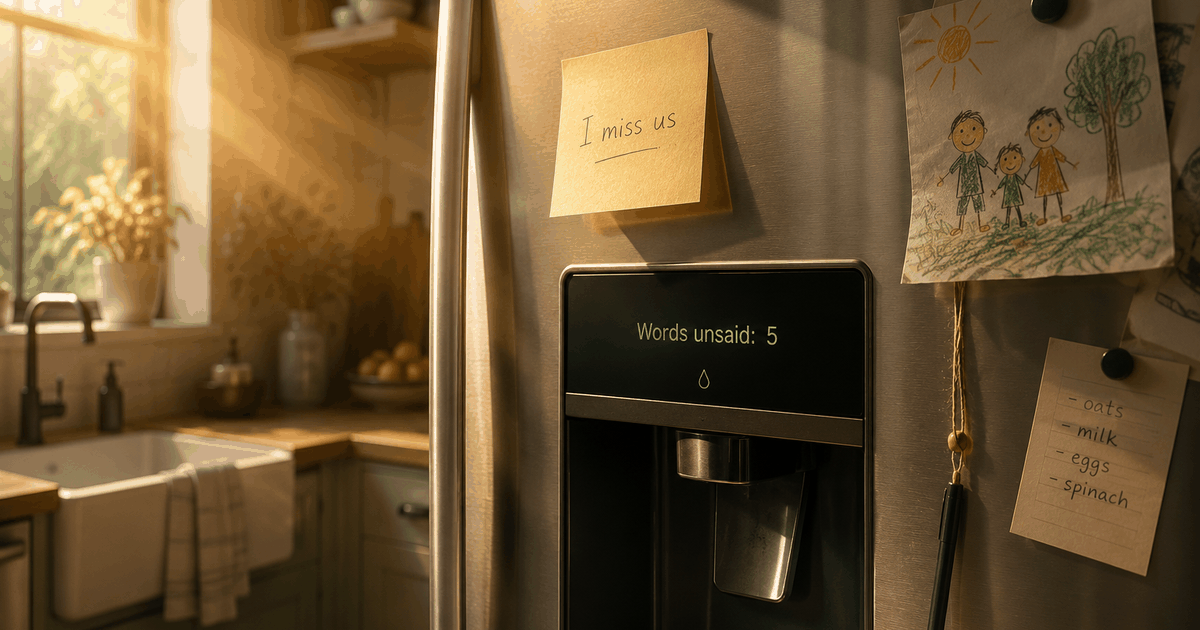
- Say "I miss us" and own the feeling. "I" language reached me; "you never" would have started a fight I had no energy for. Hearing he missed us — not that I was failing — let me actually hear him."I've been feeling kind of lonely lately. I'm not upset with you — I just miss us."
- Make one tiny, specific request. A small, concrete ask was something I could say yes to without it becoming one more item on my list."Can we take ten minutes after she's down tonight — just us, no baby talk?"
- End with appreciation. One specific kind thing landed harder than he knows. The Gottman 5:1 ratio of positive to negative moments isn't a slogan — on a hard week, a single warm sentence is what made me want to lean back in."For what it's worth — watching you with her this week, you're incredible at this."
Why I sometimes snapped (and what to do)
If she snaps when you say it, that's overwhelm spilling over, not rejection — so don't defend yourself; stay on her team, agree she's carrying more, and keep the ask small. If she gets short with you when you finally say it — "you think you're tired?" — please don't take that as the answer.
When I snapped, it wasn't rejection. It was overwhelm spilling over, plus a flash of panic that I was failing him on top of everything else.
What defused it every single time: he didn't defend himself. He'd say "you're right, you're carrying more right now," stay on my team, and keep the ask small.
And he kept showing up — because this doesn't resolve in one conversation. An 8-year study of 218 couples found the drop after a baby lingers without intentional reconnection (Doss et al., 2009). A small nightly ritual beat every big talk we ever attempted.
Frequently asked questions
How do I tell my wife I feel lonely without sounding selfish?
Lead with the shared transition, not her behavior: "Everything changed when the baby came, and you're carrying so much — I just miss us, and I want to figure out how we stay connected." Own the feeling as yours, avoid "you never," and end with one small, specific request. That frames it as teamwork, not a complaint.
Is it normal to feel lonely as a new dad?
Yes. A meta-analysis pooling roughly 140,000 parents found relationship satisfaction drops significantly after the first baby — and about as much for fathers as for mothers (Bogdan et al., 2022). Fathers often describe feeling like the third wheel at home. Loneliness in the newborn year is common — a signal to reconnect daily, not a sign your marriage is failing.
When is the best time to bring it up?
After the baby is down and you're both relatively calm — not mid-conflict and not when either of you is running on empty. A low-stakes moment, like a quiet ten minutes on the couch, lands far better than raising it during stress.
What if she gets defensive?
Don't defend or escalate. Validate her first ("You're right, you're carrying more right now"), restate that you're on her team, and keep the request tiny — ten minutes tonight — so it never feels like one more demand.
What if I freeze and can't find the words?
Use a structure so you don't have to improvise. A daily check-in tool like Regular gives you a prompt and an opening line, so saying "I miss us" becomes a five-minute habit instead of one hard conversation you keep postponing.
Keep readingLonely as a new dad? Why it happens and what helps · Why new dads feel rejected after a baby · How to reconnect with your wife after a baby
Co-founder of Regular. Writes about relationships, parenthood, and the science of how couples stay close after a baby.
About Regular — the relationship app for new dads, built by a small team of parents who needed it themselves. Small, science-backed moves with your partner, not big talks.